
By Jon Tudor, Managing Director, True North Excellence
Nobody needs to be told that sustaining operational excellence is hard. Most businesses I visit have proved it to themselves at least once. Twenty years ago I ran my first manufacturing conference, and I’ve spent the two decades since putting senior operations people in rooms together and asking them what went wrong.
That last part is the bit that matters. Best practice is built on failure, and it takes a humble leader to admit it. When I approach a speaker now, I ask them for the three biggest failures of their career. If they can’t answer, they’re not the right speaker. A polished case study is a pleasant hour that gives you nothing to use on when you’re back on the floor.
I also visit around 30 factories a year, which is where the benchmarking visits we run come from. Between the conferences and the visits I see a lot of businesses trying to build a culture of excellence, and in my experience nine out of ten of them get it wrong. Not because lean doesn’t work. Toyota have spent 70 years proving it does, and they’re still the benchmark everybody else is measured against. Businesses get it wrong because they start in the wrong place.
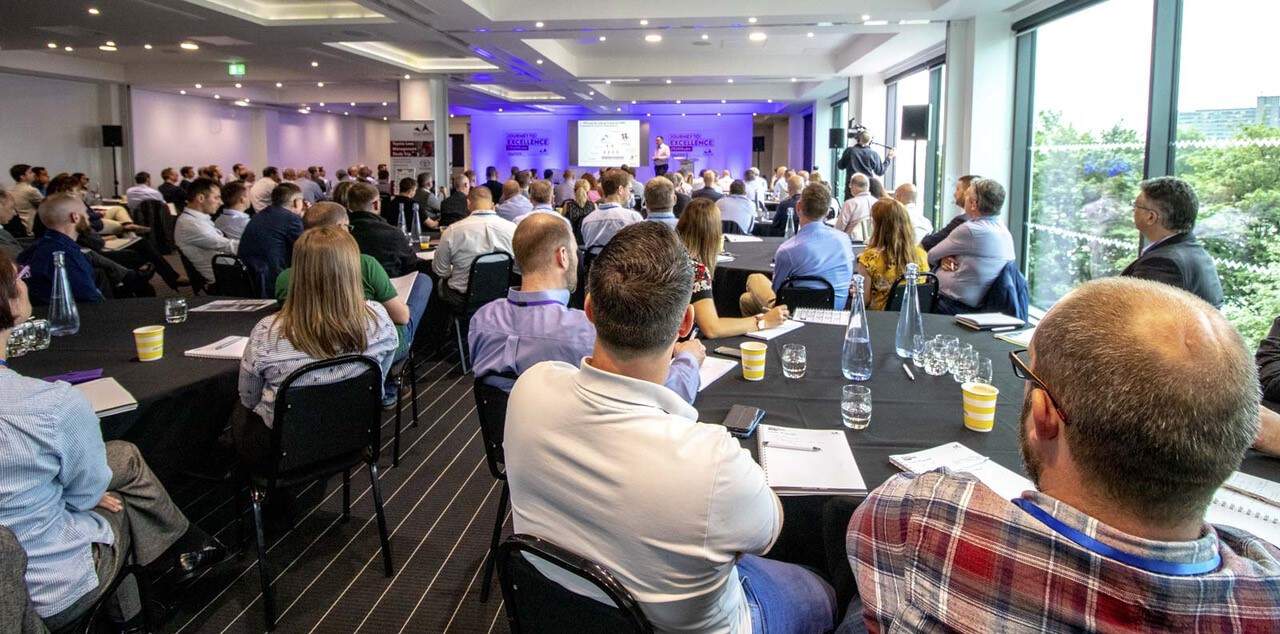
Most of what follows came out of Journey to Excellence, the conference I run every year. It’s on 6th and 7th October in Manchester, and this will be the 8th annual one.
Here’s the order I’d put it in, and it hasn’t changed in 20 years. People first. Process second. Technology last.
You can buy the most advanced technology available. If the processes aren’t there to hold it, it won’t stick. And if the people running those processes aren’t with you, it won’t even start. Technology multiplies what you already have, so if what you already have is a mess, it multiplies the mess and you’ve spent a capital budget for the privilege.
That’s the context. These are the ten things I’ve learned about making operational excellence stick, and sustaining it is the hard part. Almost none of what follows is about how to start. Starting is easy and most businesses manage it. These are the reasons it’s still running in year five.
1. Leadership Builds the Culture, and You Cannot Delegate It
Someone rings me most months. A general manager, or an operations director. Jon, my culture has problems, come and do a cultural assessment for me.
I usually know the answer before I arrive. It’s almost always a leadership issue, and quite often it’s the person who called. Not because they’re bad at their job. Because what you have in your business today is precisely what your leadership team has created, deliberately or not.
The failure mode is delegation. Improvement gets handed to someone with no authority, and the behaviours at the top never change. It runs for a while and then it stops, because nothing underneath it moved.
2. Half of a Leader’s Job Is Developing People
Ask a UK operations director how much of their week goes on coaching and developing their team. Most will tell you it isn’t really their job, that’s one for HR. Their people turn up, work hard, do the job.
At Toyota it’s half the role. Not a line in an appraisal. Half. It’s also the reason our Lean Practitioner Green Belt certifies people on a live project in their own plant rather than on an exam.
Carl Klemm’s book The Balance of Excellence is the best thing written on this in the last decade, largely because he’d finished the career before he wrote it rather than studying it from the outside. His point is that there are two halves and you need both. Develop people without tying it to a result and everyone goes round in circles being pleasant to each other while the business stands still, and eventually they get fed up anyway. Drive results without developing anybody and you get burnout, and the people who could have fixed things leave.
A plant where nobody is coached is a plant where every problem escalates to the same four people. That’s your bottleneck, your overtime bill and your retention risk all sitting in one place.
3. Visual Management: If You Can’t See the Problem, You Can’t Fix It
Visual management is the simplest thing on this list and the most often done badly.
The point isn’t the board. The point is that a problem becomes visible to the person who can do something about it at the moment it happens, and visible to their colleagues too. A problem living in a spreadsheet somebody opens on Thursday isn’t a problem anybody is solving.
A fault you catch on the line costs you the fix. The same fault caught by your customer costs you the fix, the credit note and, often enough, the next order.
4. Say Your Strategy So Often It Becomes Hypnotic
The order matters, and it’s the bit that usually gets skipped. Mission is why you exist. Vision is where you’re going. Values are how people behave on the way. Strategy is the route you’re taking.
A few years back I was judging the Manufacturer of the Year awards, in the operational excellence category, which meant walking eight plants in detail. Coming down a staircase onto one shop floor I passed an operator heading back from his lunch break. I introduced myself and asked him about the values I’d seen on the posters on the way in. What were they, and what did they actually mean to him?
He didn’t pause. He told me where the business was going and exactly how his own job moved it. Nothing rehearsed about any of it. That site won its category, and on what the whole panel saw across the visit, it went on to win overall Manufacturer of the Year.
That doesn’t come from an email from the chief executive. The best plants I see thread all four into job profiles, recruitment, appraisals and whatever they use to recognise people day to day. When your values decide who gets recognised and your strategy decides what gets prioritised, alignment stops being an HR exercise and becomes how people behave without thinking about it.
That’s how somebody on a line at two in the morning knows what to do when something unexpected happens.
Without it your improvement effort scatters. People fix whatever is in front of them rather than what the business actually needs, and you fund a great deal of activity that never turns up in your P&L.
5. Organisational Design: Right People, Right Seats, Right Direction
Excellence needs an organisation designed to deliver it. Most organisations aren’t designed at all. They’ve accumulated.
The clearest example is span of control. If a team leader has 14 direct reports, how is that person ever going to coach and develop anybody? They aren’t. They’ll spend the day firefighting, and you’ve created a job that can’t be done well by whoever you put in it.
Organisational design also decides whether accountability is real. Structure it properly and a leader can genuinely hold their people to account for their own work. Get it wrong and everything lands back on one desk.
6. Managers Make the Weather, Leadership Makes the Climate
A good manager can create decent weather in their own section. Their people are looked after, problems get dealt with, it’s a reasonable place to work.
The climate of the whole organisation is set by the leadership team, and no individual manager holds out against it forever. I’ve watched good managers protect their patch for years and then leave, and the section is back to what it was within months.
Sustaining operational excellence across a whole site needs the climate, not the weather. If you’re relying on two or three good managers to carry it, you have a retention problem you haven’t priced yet. The day they go, the performance goes with them.
7. Sustaining Operational Excellence Takes Years, Not Eighteen Months
People ask me how long a lean transformation takes, and they usually have a year in mind, maybe 18 months. Sustaining operational excellence takes five to seven years, because that’s how long it takes a business to shift both its performance and its mindset.
Changing how people behave means changing how people think, and that’s genuinely hard. It doesn’t happen through a programme with a launch event. It happens as a long run of small nudges, most of which nobody notices at the time.
The awkward part is that most leaders won’t still be in post in five years, so whoever starts it rarely gets the credit for it. That’s one of the reasons so many of these efforts get quietly abandoned around month 18, which is right at the point they were about to start paying.
Stopping there means you’ve carried the entire cost of the change and collected almost none of the return. If you can’t commit past the first plateau, spend the money on something else.
8. Lean Is Teamwork Focused on the Customer
That’s it. That’s the whole thing at its simplest.
Nobody gets up in the morning wanting to do lean. They want a result. Operational excellence is how you get there, not the point of it. Lean management is one business philosophy among hundreds, and I’ve read a fair few of them. It happens to be the one with the strongest evidence behind it, which is why it’s worth the effort. But the moment it becomes a programme with its own vocabulary instead of a way of working together to serve a customer, you’ve lost it.
If your people think lean is a set of tools the improvement team brings round on a Tuesday, you’ll get compliance and no ideas. The ideas were the return.
9. Leaders Need to Change Their Minds About Failure
Plan, do, check, act. Four words, and most businesses only ever manage the first two. They make a good plan. They do it. They never check whether it worked, and they never adjust.
That’s a leadership habit and it comes from how failure gets treated. If an experiment that didn’t work is a black mark, nobody will run one. If it’s normal, and the only question afterwards is what you learned, you’ll get dozens of them. SpaceX built a business on failing quickly and in public. I wrote about watching Toyota themselves fail, and why it was the best thing I saw that year, which is the clearest version of this I have.
Experiment often, find out fast, move on.
A business that can’t run cheap experiments ends up making one large expensive bet instead, usually on capital equipment, and finds out whether it worked after the money has gone.
10. If Your Leadership Isn’t With You, Learn Anyway
This last one is personal, and I get asked about it more than anything else on the list.
People contact me regularly with a version of the same thing. Jon, I’m trying to do this properly and they don’t get it. They don’t back it. It isn’t important to them and it isn’t going to become important.
My honest answer is that you may not be able to change it. What you can do is experiment and learn as much as your current job allows, build your own set of tools and your own understanding, and get good. Then when you move to a business that does want this, you’ll fly.
And if you’re the employer reading that, this is what losing your best improvement people looks like from the inside. They don’t leave over money. They leave because nothing they build survives them.
Evergreen Version
Ten lessons in 20 years isn’t many. They’re almost all about people, which is the part that hasn’t shifted at all in that time and probably never will. That’s also why so much opex work stalls. Sustaining operational excellence is harder than starting it, and the tools are the easy bit that everybody gets right.
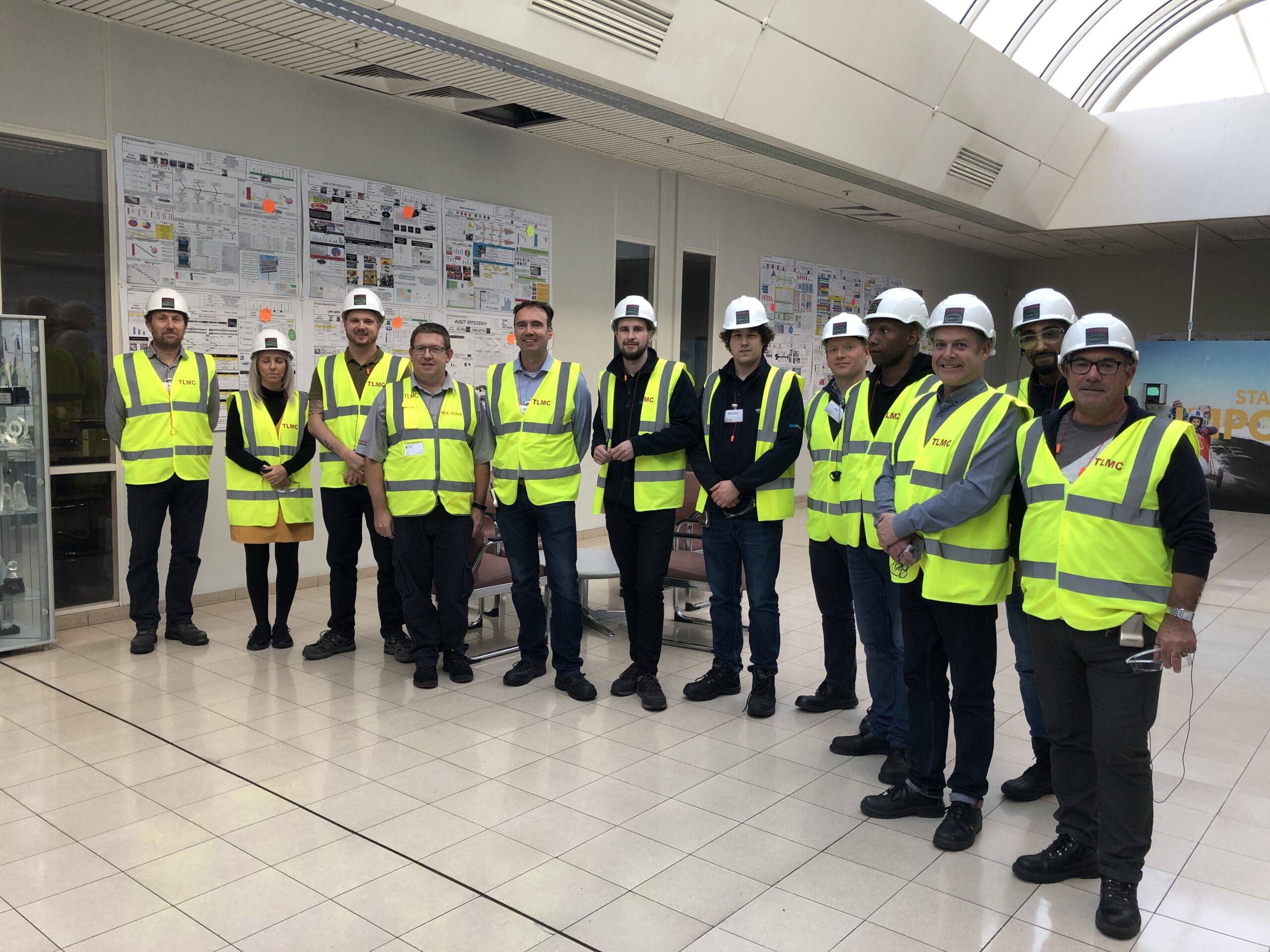
If you want the longer version, that’s what the conference is for. Journey to Excellence is on 6th and 7th October in Manchester, and this will be the 8th annual one. Day one is manufacturing and operational leaders talking about what actually happened, including the parts that went wrong. Day two you spend a full day inside one of five working plants.
Twenty years in and I still come away with something I didn’t know. That’s why I keep doing it. Hopefully I’ll see you there.